Journal / June 9, 2026
Gay Male Massage Therapists in Toronto: What to Know Before You Book
Searching for a gay male massage therapist in Toronto? Here's what the market offers, what to look for, and what the city is still missing.
By Menquility Team
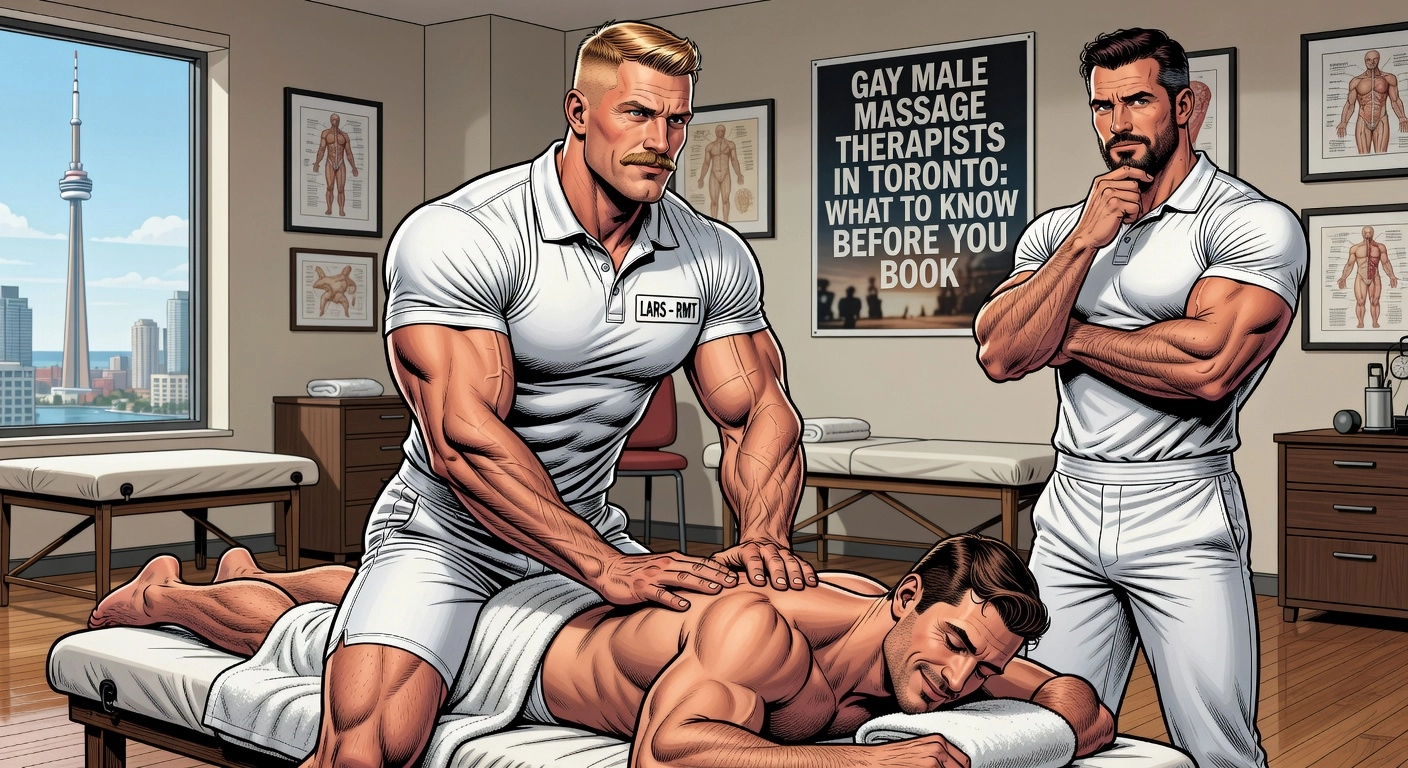
Finding the right massage therapist can feel overwhelming, especially when you want someone who truly understands your needs and makes you feel comfortable from the moment you walk in the door. If you've been searching for a gay male massage therapist in Toronto, you're definitely not alone. Plenty of people are looking for a safe, affirming, and judgment-free experience where they can fully relax without worrying about feeling misunderstood or uncomfortable.
The good news? Toronto has a vibrant and welcoming wellness community, and there are some fantastic options out there. But before you book your first appointment, there are a few things worth knowing so you can make a confident, informed choice.
In this guide, we're breaking everything down in a simple, beginner-friendly way. You'll learn what to look for in a therapist, how to find reputable professionals, what questions to ask before booking, and how to make sure your experience is everything you're hoping for. Let's dive in and take the guesswork out of finding your perfect massage therapist in Toronto.
What Gay-Affirming Massage Actually Means in Practice
"Gay-affirming" gets thrown around a lot in wellness marketing, but the label alone doesn't tell you much. In practice, it means three specific things: a therapist who is genuinely comfortable with male bodies and [M4M touch dynamics](https://menquility.com/journal/journal/gay-massage), zero judgment about your orientation or identity, and a space where you can walk in without having to explain, justify, or code-switch your way through the experience. Think of it as the difference between being tolerated and actually being seen.
Passive Inclusion vs. Active Affirmation
This distinction matters more than most people realize. Passive inclusion is when a straight therapist puts "LGBTQ-friendly" on their website but has no particular training, lived experience, or cultural competence around queer clients. They probably won't discriminate, but they also won't understand the specific dynamics of M4M touch, and you might find yourself doing quiet emotional labor just to get through the intake form.
Active affirmation is something else entirely. It comes from queer or queer-allied therapists who understand why affirming touch is genuinely healing for gay and queer clients, including the layers of hypervigilance, minority stress, and body image concerns that many gay men carry. You can discuss what you're looking for plainly, without euphemisms or awkward pauses. That openness during intake directly shapes how deeply your nervous system relaxes during the session itself. When your body registers genuine psychological safety, it actually lets go. Without it, you stay guarded, and the therapeutic benefits stay shallow.
How Toronto Handles Gay-Affirming Credentials
In Toronto, "gay-affirming" credentials exist on a real spectrum. On one end, you have self-declared directory listings on platforms where anyone can add a label. On the other end, Rainbow Health Ontario maintains a documented provider network of Registered Massage Therapists who have formally committed to competent 2SLGBTQ+ care. Those listings aren't independently verified, but they do represent an intentional, documented commitment rather than a casual marketing checkbox. Knowing where a provider sits on that spectrum is a smart first question to ask before you book.
Licensed RMTs vs. Independent Practitioners: Understanding the Difference
Once you start searching for a gay male massage therapist in Toronto, you'll quickly notice that listings fall into two very different categories. Knowing the distinction upfront saves you time, money, and any awkward surprises.
What an RMT designation actually means
In Ontario, "Registered Massage Therapist" is a legally protected title regulated by the College of Massage Therapists of Ontario (CMTO). To earn RMT status, a therapist must complete approved education, pass two mandatory exams (a written multiple-choice test and a hands-on clinical evaluation), complete a Jurisprudence Program covering ethics and professional boundaries, and maintain liability insurance of at least $2 million per occurrence. As of late 2025, there were 16,860 registered RMTs in Ontario. That's a real professional infrastructure with teeth. RMTs can issue insurance receipts for extended health benefits, which matters if your workplace plan covers massage therapy.
What independent practitioners offer
Independent or unlicensed practitioners operate outside the CMTO framework entirely. On platforms like Kijiji and Man2ManMassages, you'll find dozens of active Toronto listings for male-to-male massage, typically priced between $60 and $140 per hour. These sessions lean toward relaxation, sensual, or body-focused experiences rather than clinical treatment. Many listings are outcall-only and emphasize discretion and male therapist availability over credentials.
The real tradeoffs
Neither category is automatically the better choice. If you're dealing with a sports injury, chronic pain, or want sessions covered by insurance, an RMT is the clear fit. If your priority is affirming male touch, a relaxed non-clinical atmosphere, or more flexible service types, an independent practitioner might suit you better. Be honest with yourself about what you're actually looking for before booking.
Read every listing carefully
Licensing status is frequently unclear on directories like Masseurfinder or Man2ManMassages. Some listings omit credentials entirely; others use vague language like "certified" without specifying registration. To verify RMT status directly, use the CMTO's public "Find an RMT" search tool at cmto.com before committing.
The Types of Gay Male Massage Providers You Will Find in Toronto
Now that you understand the difference between licensed and unlicensed practitioners, it helps to see the full landscape laid out clearly. Toronto's market for gay male massage is genuinely diverse, but that diversity can feel overwhelming when you're just starting your search. Here's a practical breakdown of the five main provider types you'll encounter.
1. Solo Gay-Affirming RMTs
These are individual Registered Massage Therapists who explicitly welcome LGBTQ+ clients and operate out of small studios, clinical spaces, or home-based setups. The best place to find them is the Rainbow Health Ontario service provider directory, which lists 2SLGBTQ+-committed RMTs across Ontario who have self-identified as affirming practitioners. Examples include Haven Therapeutic Massage on Spadina Ave., Benjamin Hanlon RMT at Origin Wellness TO, and Ripple Effect Massage Therapy, a gay-owned studio emphasizing respect and safety. These practitioners deliver evidence-informed techniques like Swedish and deep tissue, and their sessions are typically eligible for extended health benefits in Ontario. If insurance coverage matters to you, this is your starting category.
2. Queer Wellness Studios
SVNCTUM is the closest thing Toronto has to a branded queer wellness space. Gay-owned and operated, it prioritizes the 2SLGBTQ+ community and offers holistic RMT services including relaxation massage, deep tissue, hot stones, and post-op scar massage in a judgment-free environment. As of mid-2026, it relocated to 2 Carlton St. downtown. It is therapeutic in focus, not sensual, so set your expectations accordingly.
3. Directory-Listed Independent Masseurs
Platforms like Masseurfinder, Man2ManMassages, and GayWellness host large volumes of male masseurs catering specifically to gay and bi men. Credentials vary widely across these listings, ranging from trained RMTs to self-taught practitioners. Pricing generally falls between $60 and $140 per hour, with both in-studio and outcall options available. Always check reviews and verify credentials through the College of Massage Therapists of Ontario before booking.
4. Mobile and Outcall Practitioners
For anyone prioritizing discretion or convenience, mobile practitioners are a popular choice across the Greater Toronto Area. Listings on Kijiji and Locanto regularly feature male-to-male massage providers who travel to your home or hotel, often bringing their own table and supplies. Pricing in this category tends to mirror directory rates, roughly $60 to $140 per hour, and many practitioners emphasize male-only services explicitly in their ads.
5. Gay Bathhouses
Spa Excess at 105 Carlton St. and Steamworks on Church Street are well-known social venues for gay and bi men, built around saunas, steam rooms, hot tubs, and private spaces. Informal massage may happen in these environments, but they function as social and sexual wellness clubs, not appointment-based therapeutic studios. If you're looking for a private, structured massage session, a bathhouse is a fundamentally different experience and worth understanding as its own category rather than a substitute.
What to Actually Look for When Booking a Gay Male Massage in Toronto
Now that you know the landscape, here is how to actually evaluate your options before you book anything.
1. Verify credentials before you commit
If a listing uses the title "Registered Massage Therapist" or "RMT," that title is legally protected in Ontario and can only be used by someone registered with the College of Massage Therapists of Ontario. The CMTO runs a free public register where you can look up any RMT before you book and confirm their status, practice location, and any conduct history. Takes about two minutes. For independent or unlicensed practitioners, the standard is transparency: a trustworthy provider will tell you clearly what their training background is so you can make an informed decision. Vague credentials or borrowed professional-sounding titles are a yellow flag worth noting.
2. Pay attention to the intake process
A provider worth booking will ask about your health history, any injuries or conditions, your pressure preferences, and what you want out of the session. This is not just professional courtesy; it is how safe, quality work gets done. If a listing or first conversation involves zero questions about your body or goals, that tells you something about how client-centered the experience will actually be.
3. Read the space description carefully
Private suite, appointment-only, dedicated studio setup versus a home spare room or no address listed at all: these details matter. Look for specifics about privacy and environment rather than vague references to a "discreet location."
4. Cross-reference reviews across multiple platforms
One glowing directory profile does not tell you much. Look for consistent feedback patterns across specialized directories like RentMasseur, Google, Reddit, and anywhere else the provider shows up. Repeated positive comments about technique, communication, and cleanliness are meaningful signals.
5. Trust how first contact feels
Prompt, clear, pressure-free responses to your initial questions are a reliable preview of the session itself. If something feels off before you even arrive, pay attention to that.
What Toronto's M4M Massage Market Is Still Missing
Here is something worth saying plainly: Toronto has a lot of gay male massage options. Directories like MasseurFinder list dozens of providers, classifieds stay active year-round, and the city's queer community is large enough to support real demand. So the issue is not volume. The issue is structure.
The market is deeply fragmented. Solo RMTs work out of small studios or offer mobile sessions. Informal listings on platforms like Locanto blend therapeutic and sensual services with varying degrees of transparency. Bathhouses and gay social venues provide a queer-centered environment but are built around recreation, not licensed bodywork. Each of these fills a real need for a slice of the market. None of them add up to a unified experience.
What's actually missing is a single, boldly branded, queer-owned destination that puts licensed therapeutic massage, sensual options, private suites, and a genuinely affirming identity all under one roof. Canada's spa and massage market is valued at approximately USD 92.3 billion in 2024 and is projected to grow at 4.8% annually through 2033. That is a massive industry with real momentum behind men's wellness specifically. Yet within that growth, the premium queer-branded niche in Toronto remains underdeveloped in a way that is hard to ignore.
The practical consequence falls on you as a client. If you want a licensed therapist, you can find one. If you want a queer-owned environment that feels like a sanctuary rather than a side room in a generic studio, that exists too, but rarely in the same place. Most men end up choosing one or the other.
This is not a criticism of any individual provider. It reflects something broader: queer wellness demand has expanded faster than the dedicated infrastructure built to serve it. The model simply has not been built in Toronto yet.
The NYC Option: A Premium M4M Sanctuary Worth the Trip
If Toronto's M4M massage market leaves you wanting something more complete, more intentional, and more explicitly built for you, there is a genuinely compelling alternative just a short trip away.
Menquility — Kips Bay, Manhattan NYC. By appointment only. Contact the concierge for arrival details.
The service menu alone sets it apart from anything you will find consolidated under one roof elsewhere. Sessions run from 60 to 120 minutes and cover Swedish, Deep Tissue, Hot Stone, Thai, Aromatherapy, Sensual Massage, and Nuru Massage. Whether you are looking for targeted muscle relief, full-body relaxation, or something more intentional and present, the full range is available in a single, purpose-built location. That kind of breadth, without having to piece together multiple providers across multiple platforms, is a meaningful difference.
The sanctuary model matters too. There are no shared common areas, no ambiguous signage, no guessing whether the environment is actually built for you. Menquility is explicitly M4M, unapologetically queer, and structured around discretion and privacy at every step. Clients arrive knowing exactly where they are and what the space stands for.
Framing a Toronto-to-NYC trip as a wellness tourism decision rather than a hassle makes more sense than it might first appear. The flight is roughly 90 minutes; overnight bus options exist for the budget-conscious. The global men's health and wellness market is projected to reach US$2.88 trillion by 2030, and premium queer wellness experiences are increasingly driving urban travel decisions for exactly this reason.
To book, call or text +1 (646) 347-1740, email concierge@menquility.com, or visit in person by appointment. The spa is open daily from 10am to 10pm and is easily accessible from across Midtown Manhattan.
Making the Right Choice for Your Needs
Toronto genuinely has options. Licensed RMTs, queer-inclusive studios, and independent practitioners all exist within the city, and some of them do excellent work. But quality, atmosphere, and experience vary significantly depending on what you actually prioritize. If your main concern is insurance coverage and clinical standards, a licensed RMT is your clearest path. If you want a judgment-free environment with a queer community feel, studios like SVNCTUM point in the right direction. The licensed versus independent framework remains the single most useful filter for cutting through the noise quickly.
What Toronto has not yet built is a full-service, unapologetically queer branded sanctuary designed specifically for gay, bi, and curious men from the ground up. Inclusive care and a true M4M wellness destination are two different things, and that gap is real.
That is where Menquility sets the benchmark. Built intentionally, boldly queer, and located in Midtown Manhattan, it represents exactly what this experience can look like when nothing is compromised. For Toronto men open to making the trip, it is a genuinely accessible option worth taking seriously.
Book a session, text or email with questions, or use everything in this guide to confidently move forward with whatever local option fits where you are right now. No pressure either way.
Conclusion
Finding the right gay male massage therapist in Toronto does not have to be stressful or overwhelming. By knowing what qualifications to look for, asking the right questions before booking, and choosing a therapist who prioritizes your comfort and safety, you set yourself up for a genuinely restorative experience.
Toronto's wellness community is rich with affirming, knowledgeable professionals who are ready to meet you where you are. You deserve a space where you feel seen, respected, and completely at ease.
Now it is time to take action. Use the tips in this guide to start your search, reach out to a few therapists, and trust your instincts when something feels right. Your well-being is worth investing in. The perfect appointment is closer than you think, so go ahead and book it.