Journal / July 11, 2026
What to Look for in a Gay Friendly Massage Therapist
Most therapists call themselves gay friendly. Few actually are. Here's what separates a truly affirming massage from one that just tolerates you.
By Menquility Team
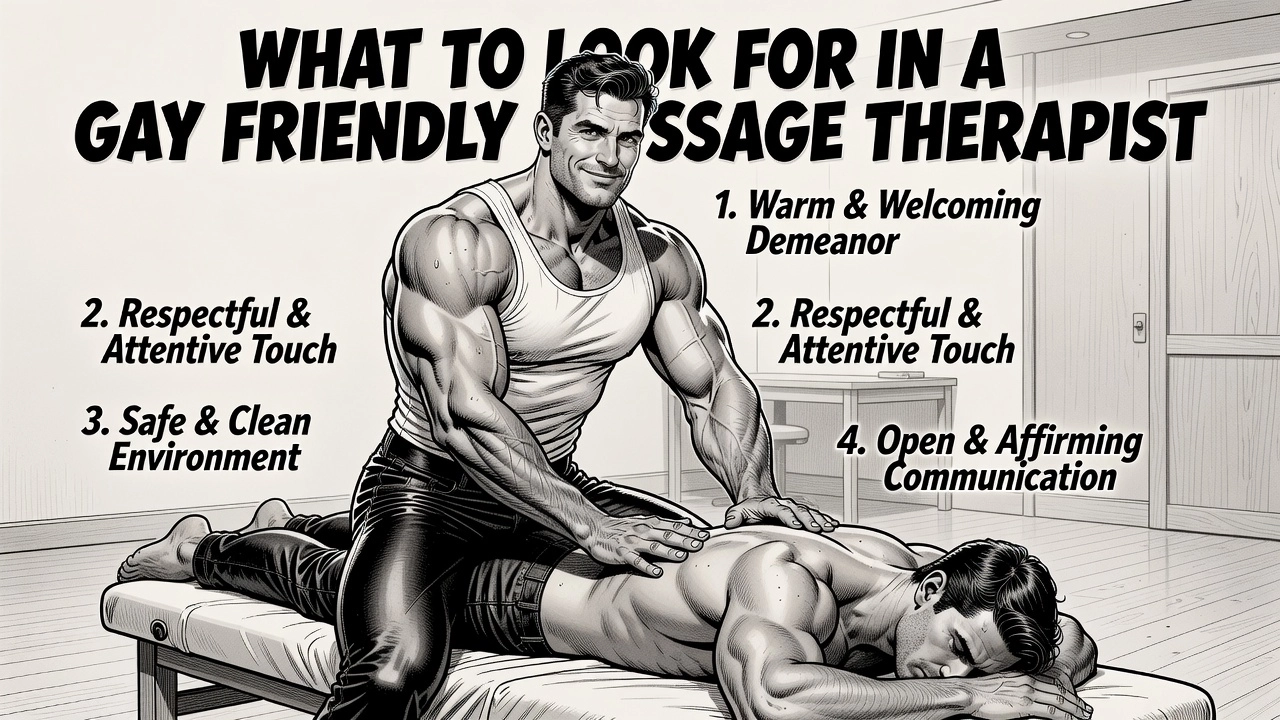
Finding a massage therapist you feel completely comfortable with can make all the difference between a relaxing experience and an awkward one. For LGBTQ+ individuals, that comfort level goes even deeper. You deserve a safe, welcoming space where you can fully unwind without worrying about judgment or discomfort.
That is exactly why knowing how to find a gay friendly massage therapist is so important. Whether you are brand new to massage therapy or simply looking to switch to someone who truly gets it, choosing the right professional can transform your wellness journey in a big way.
In this post, we are breaking down the key things to look for when searching for a therapist who is not just tolerant but genuinely inclusive and affirming. From checking their online presence to reading reviews and asking the right questions, we have got you covered with practical, easy-to-follow tips. By the end, you will feel confident knowing exactly what to look for so you can book your next session with total peace of mind. Let's dive in!
Gay Friendly vs. Gay Affirming: Why the Difference Is Felt in Your Body
Not all "gay friendly" massage therapists are the same, and your body already knows this, even when your brain is still being polite about it.
Think of provider attitudes as a spectrum. At one end, you have therapists who tolerate gay clients: they complete the session, they don't say anything overtly offensive, but something feels slightly off. They ask unnecessary questions about your partner. They skip glute work or inner hip release without any clinical reason, areas that carry enormous chronic tension in active men. Their touch feels careful in the wrong way, hesitant rather than intentional. One step up is gay friendly: inclusive intake forms, no visible discomfort, a completed session that checks the boxes. Better, but still centered on a straight provider doing their best to accommodate you. At the far end is something structurally different: a practice built by and for gay men, where your identity is not an accommodation but the default. Every intake question, every draping decision, every therapeutic choice is made without social filtering layered on top of clinical judgment.
That distinction matters physically. Research from the APA confirms that sexual orientation is a normal human variation, yet wellness spaces frequently fail to reflect that understanding in their actual practice. When a therapist is even mildly uncomfortable, their nervous system activates. Their grip tightens. Their strokes shorten. Their session focus drifts away from the areas you actually need worked. That physiological signal transmits directly through touch, and your body receives it as a low-grade threat cue, doing the exact opposite of what massage is supposed to do.
This is where cognitive burden enters the picture. Even without a single uncomfortable word being spoken, gay men in non-affirming spaces allocate real mental energy to monitoring the therapist's reactions, managing their own self-disclosure, and preemptively softening anything that might create friction. Health disparity research consistently frames this kind of ongoing vigilance as a structural health issue, not a personal sensitivity. You are doing emotional labor during a session that is supposed to shut that system down entirely.
The fact that this remains an active problem is not speculation. A single Facebook group post in April 2025 asking for LGBT+-friendly massage therapist recommendations in a mid-sized Midwest city pulled 97 reactions and 46 comments from community members actively trading peer referrals because verified, affirming providers are genuinely hard to find through standard channels. This is not a 2015 problem. It is a 2026 problem, and it is happening in every market, not just small towns.
This gay-friendly-versus-gay-affirming distinction is the lens through which every other item on this checklist needs to be read. A provider can have perfect technique, a beautiful space, and a five-star rating, and still cost you the full restorative benefit of your session if the foundational dynamic is off. Everything else builds from here.
Queer Ownership Is Not a Marketing Label, It Is a Structural Commitment
There is a meaningful difference between a spa that markets to gay clients and one that is built by queer people from the ground up. The first puts a rainbow in the window and trains staff on inclusive language. The second makes decisions rooted in lived experience, the kind that comes from personally knowing what it feels like to wonder whether your therapist is judging you, whether the front desk person overheard something, or whether you have to explain yourself just to relax.
Ownership shapes everything beneath the surface. It determines who gets hired and why. It influences how intake forms are worded, whether they assume heterosexual relationships or simply ask open questions. It decides whether discretion is a verbal promise or something physically built into the space through private suites, soundproofing, and appointment-only access. These are not marketing decisions. They are operational ones, and they flow directly from whoever is running the place and what they personally understand about the community they serve.
This is also why browsing a directory only gets you so far. Platforms like GayWellness, FriendlyMasseurs, and Guys Massage are discovery tools, and useful ones, but they have no ownership stake in what actually happens during your session. Vetting the individual provider, checking credentials, and assessing whether the environment truly fits your needs remains entirely your responsibility once you leave the listing page.
Menquility — Kips Bay, Manhattan NYC. By appointment only. Contact the concierge for arrival details.
Before you book anywhere, ask one direct question: "Is this practice queer-owned?" The answer tells you whether the experience was shaped by people with genuine skin in the game, or whether "gay friendly" is simply the marketing language someone chose to reach your demographic. According to Massage Magazine's guidance on LGBTQ-affirming practice, truly affirming care goes well beyond seasonal gestures. It requires consistent, structural commitment. Ownership is where that commitment either starts or doesn't.
Why Your Therapist's Identity Changes the Room
Let's start with a plain definition, because the term M4M comes up often in gay wellness spaces and deserves a clear explanation. M4M therapeutic massage simply means licensed, professional bodywork where both the therapist and client are male, and the entire experience is designed to feel genuinely affirming for gay, bisexual, and queer men. It does not imply anything beyond skilled, therapeutic touch delivered in an environment built for your comfort. If you are bi, curious, or somewhere in between and not sure any of this vocabulary applies to you, it still does. You do not need a label to benefit from a room designed with your ease as the actual priority.
Here is what makes that room different on a physiological level. Your nervous system does not wait for conscious confirmation before it starts reading the space. It is constantly scanning for social safety cues, subtle signals that tell it whether this environment is trustworthy or whether it should stay alert. When those cues register as safe, cortisol production eases and your body shifts into a parasympathetic state, the rest-and-restore mode that makes deep therapeutic work possible. Research on gay men's health consistently documents that minority stress keeps cortisol elevated and parasympathetic access more difficult to reach. An affirming therapist is not a nice bonus; the affirmation is literally part of the clinical mechanism.
The contrast in mainstream spa settings is real and worth naming. Therapist discomfort is rarely announced. It shows up as a pause, a shift in body language, or an ambient sense that you are responsible for managing someone else's ease. That low-level vigilance costs you something. Your nervous system stays partially activated, your muscles do not fully release, and the therapeutic benefit you showed up for is capped before a single technique is applied.
For bi and curious men specifically: an affirming M4M therapist does not require you to explain yourself or claim an identity before the session starts. The room is already built around your comfort. That is the baseline condition, not a reward for self-disclosure.
Professional language in massage therapy is still actively evolving, which means client-facing terms like M4M and gay-affirming fill a practical communication gap that mainstream directories simply cannot. At Menquility, that affirmation is grounded in identity, not just training. And because every session is appointment-only, the therapist arrives already committed and prepared. The room is calibrated before you walk in.
The Health Science Behind Why Gay Men Need Affirming Massage More, Not Less
Here is where the conversation about gay-affirming massage stops being about preference and starts being about physiology.
Minority stress is not the same as having a bad day. It is the chronic, cumulative psychological burden that builds up over a lifetime of navigating a world built around heterosexual norms. It comes in two forms: distal stressors like actual discrimination or hostile encounters, and proximal stressors like anticipating rejection, concealing your identity, or constantly monitoring how you are perceived. Research by Dr. John Pachankis found that gay and bisexual men develop a deep hypersensitivity to how others see them, expecting rejection even in neutral situations. That vigilance does not clock out when you book a massage.
The biological consequences are documented and serious. A 2025 systematic review covering studies from 2019 through 2024 linked minority stress directly to cortisol dysregulation, cardiovascular markers, and immune function changes in sexual minority people. Gay men carry measurably higher rates of anxiety, depression, disrupted sleep, and cardiovascular disease risk compared to heterosexual peers. These are not feelings. They are physiological realities with long-term health implications.
Therapeutic massage is one of the most effective tools for addressing exactly these biological pathways. Sessions reduce cortisol, activate the parasympathetic nervous system, lower blood pressure, and improve sleep quality. The clinical evidence on this is consistent and well-established.
Here is the problem. A gay man on a massage table in a non-affirming environment is not relaxing. He is working. He is monitoring the therapist's comfort level, editing his conversation, managing his body language, and bracing for subtle cues of judgment. That is minority stress physiology activating in real time, directly counteracting every therapeutic benefit the session was supposed to deliver.
This makes affirming massage a clinical distinction, not a luxury upgrade. The environment is not a bonus feature; it is part of the mechanism. And almost none of the gay wellness content published in 2026 is making this case clearly.
Discretion Is a Therapeutic Feature, Not a Privacy Policy
Most places that call themselves gay friendly have updated their intake forms and trained their front desk staff to smile. What they have not done is change the room.
That distinction matters more than it sounds, because safety is not a comfort preference in therapeutic settings; it is a physiological prerequisite. Research in clinical neuropsychiatry is direct on this point: without a genuine felt sense of safety, the nervous system cannot shift into the parasympathetic state that makes massage therapeutically effective in the first place. You cannot receive deep, restorative bodywork while your brain is quietly running background threat assessments. The two states are biologically incompatible.
Here is what most people do not think about: the threat assessment often starts in the lobby.
Shared hallways, open reception desks, and walk-in foot traffic are not neutral environments for gay or bi men. They function as low-grade social surveillance zones. Your nervous system registers who might see you walk in, whether anyone recognizes you, and what that visibility could cost. That scan happens automatically, below conscious awareness, and it creates a load. Research on LGBTQ+ clients in clinical settings confirms this clearly: affirming language at the front desk does not deactivate a vigilance response that the physical environment has already triggered.
Menquility — Kips Bay, Manhattan NYC. By appointment only. Contact the concierge for arrival details.
Studies on therapeutic room design consistently show that privacy and isolation from ambient social activity rank among the highest-priority environmental features clients name. Not ambiance. Not music. Privacy. That finding is not surprising when you consider that gay men already carry a chronic minority stress load before they walk through any door. A private suite does not just feel better; it actively removes the conditions that prevent the therapeutic process from working.
This is not standard practice, even among providers who use gay friendly language in their listings. Attitudinal affirmation and structural design are different things, and your body knows the difference the moment you step inside.
Licensed, Legitimate, and Accountable: Why Credentials Still Matter in This Niche
Here is something that does not get talked about enough in the gay massage space: the words "gay-affirming" and "M4M" carry zero legal weight. Anyone can use that language in a listing, on a website, or in a social media bio regardless of whether they hold a single hour of professional training. That ambiguity has real consequences for your safety, the quality of care you receive, and your ability to seek recourse if something goes wrong.
In New York State, a legitimate massage therapy license is not a formality. It requires a minimum of 1,000 classroom hours at an approved school, including 200 hours of anatomy, physiology, and neurology, plus 150 hours of supervised hands-on practice. Candidates must then pass the New York State Massage Therapy Examination before they can legally use the title "massage therapist." Once licensed, they renew every three years and must complete 36 continuing education units per cycle. That is a substantive credential, not a weekend certification.
The expansion of M4M discovery platforms in 2026 is a good thing for visibility, but it also widens the pool of providers appearing in search results without any license verification gate. A credentialed therapist and an unlicensed "body worker" can look nearly identical in a listing. Body worker, by the way, is not a regulated title in New York. It has no minimum training floor and no oversight body.
So here are three concrete steps before you book with anyone:
- Ask for their New York State license number. A licensed therapist will give it to you without hesitation.
- Verify it yourself using the free public lookup tool maintained by the New York State Education Department's Office of the Professions. You can confirm active status and check for any disciplinary history.
- Ask whether they carry professional liability insurance. Licensed practitioners hold this as a standard condition of practice. Unlicensed providers typically do not, and its absence tells you something important.
The goal is not to make booking feel like a background check. It is to understand that safety and affirmation are not competing values. They belong together. Menquility's therapists are fully licensed, which is part of why the studio operates from a fixed Midtown address by appointment only, a structure that signals accountability alongside everything else the space is built to offer.
Finding Gay Affirming Massage in NYC: What Midtown Actually Offers
If you open your phone right now and search "gay friendly massage therapist NYC," here is what you are actually going to get: national directories, independent operators working out of private apartments, and listings that mix licensed professionals with completely unverified providers. For a gay man sitting in Chelsea, Hell's Kitchen, the West Village, or the Upper West Side, that search result page is not a solution. It is a research project with unclear safety outcomes.
Menquility — Kips Bay, Manhattan NYC. By appointment only. Contact the concierge for arrival details.
The contrast with directory-based discovery is real and worth naming plainly. Platforms that aggregate independent providers do exactly one thing well: they surface options. What they cannot do is tell you what the room looks like, whether the environment feels professional, or whether the therapist will still be there next month. With a fixed studio, you know the address, the building, and the private suite setup before you ever arrive. That certainty is part of what makes the experience therapeutic before the session even starts.
A permanent Midtown location also enables something no directory ever could: a regular therapeutic relationship with the same licensed M4M therapist over time. That continuity compounds the health benefits you get from each session.
Menquility is open daily from 10am to 10pm, by appointment only. Reach the team by call or text at +1 (646) 347-1740, or email concierge@menquility.com to book.
Matching the Right Massage Modality to What Your Body Actually Needs
Choosing a massage modality is not like picking a flavor at a counter. It is a clinical decision that starts with what your body is actually carrying right now, and a good gay-affirming therapist will help you land on the right starting point before the session even begins.
Swedish massage is the most common entry point, and for good reason. It works directly on the parasympathetic nervous system, dialing down the cortisol-driven stress response that gay and bisexual men often carry at a chronically elevated baseline. Minority stress is not occasional anxiety. It is the accumulated physiological cost of navigating a heteronormative world every single day. Swedish technique uses long, flowing strokes to interrupt that pattern and signal safety to a nervous system that has been running on low-grade alert. If you have never received affirming therapeutic massage before, this is usually where to start.
Deep tissue becomes the right call when the tension is more structural. Years of desk posture, construction work, or any occupation that locks the neck, upper back, and shoulders into repetitive patterns can produce myofascial restrictions that Swedish work alone will not fully address. What changes in an affirming room is the quality of feedback you can give. When you are not quietly managing how a therapist is reading you, you can focus entirely on what your body is telling you and communicate pressure needs accurately.
Hot stone and aromatherapy work by extending the parasympathetic window that manual work opens. Sustained heat from the stones softens tissue and prolongs the relaxation response. Aromatherapy engages the olfactory system, which connects directly to the limbic brain and deepens that calm. Both modalities perform best in a genuinely private, low-stimulation setting where there is nothing pulling your attention back to the outside world.
At Menquility, sessions run from 60 to 120 minutes across all modalities. If you are unsure where to begin, a quick call or text before you book can help you sort it out before you arrive.
You Deserve a Room Where You Do Not Have to Manage Anyone Else's Comfort
The criteria are not complicated once you see them clearly. A genuinely affirming provider is queer-owned, staffed by licensed M4M therapists, operating in private infrastructure, grounded in real therapeutic purpose, and reachable from anywhere in New York City today. Every item on that list is a non-negotiable, not a bonus feature.
"Gay friendly" is a low bar, and your nervous system has always known this. The difference between a therapist who tolerates your presence and one who shares your world is not a matter of preference. It is physiological. A body scanning the room for judgment cannot release. That vigilance is a stress response, and stress responses cancel therapeutic outcomes.
Menquility — Kips Bay, Manhattan NYC. By appointment only. Contact the concierge for arrival details.
The right room is not a luxury. It is the baseline condition under which massage actually works. In New York City, finding it is now one booking away.
Conclusion
Finding a gay friendly massage therapist does not have to feel overwhelming. By checking a therapist's online presence, reading LGBTQ+ specific reviews, asking the right questions upfront, and trusting your instincts, you can find someone who makes you feel genuinely seen and respected.
You deserve a wellness experience that feels safe, affirming, and completely judgment-free. The right therapist will not just meet your physical needs; they will create a space where you can fully relax and recharge without hesitation.
Now it is time to put these tips into action. Start your search today, reach out to a few therapists, and do not be afraid to ask questions before booking. Your comfort and well-being are worth the extra effort. The perfect massage therapist is out there waiting to welcome you exactly as you are.