Journal / July 9, 2026
Gay Massage in New York: What to Look For and Where to Go
Looking for gay massage in New York? Find licensed M4M therapists, queer-owned spaces, and what to expect before you book in NYC.
By Menquility Team
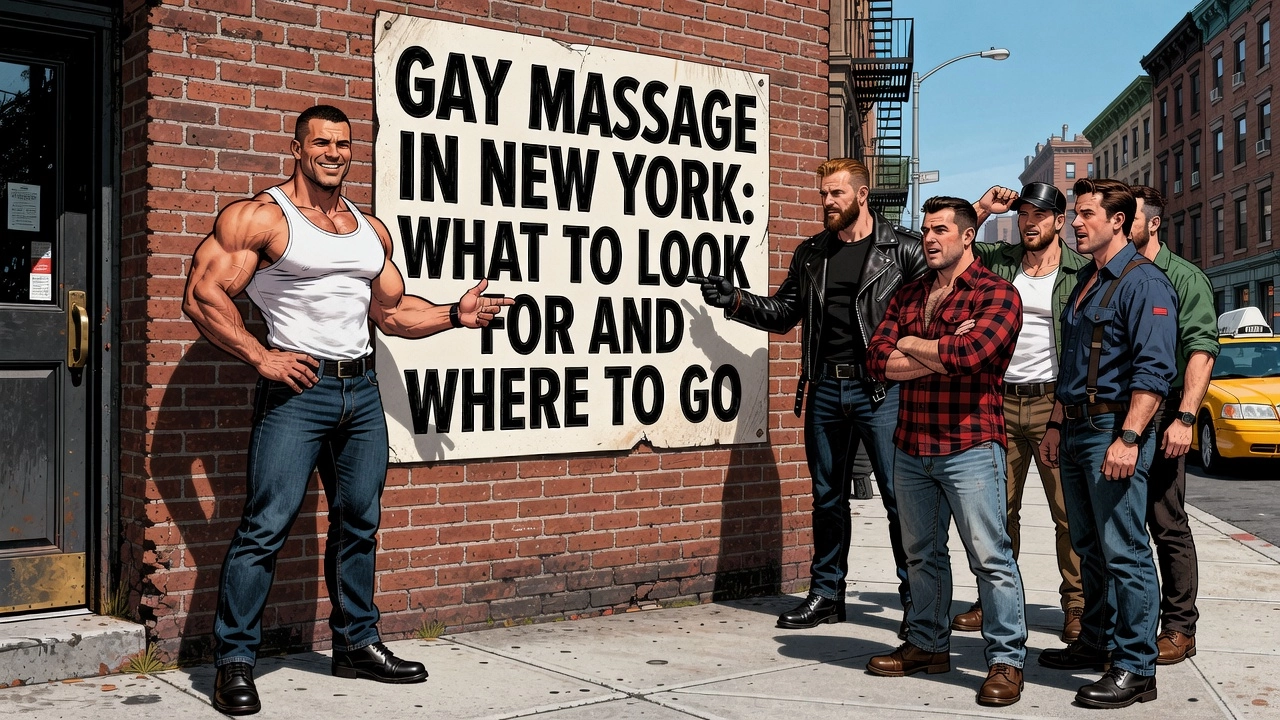
So you're curious about getting a gay massage in New York but not quite sure where to start? You're definitely not alone. New York City is one of the most vibrant and welcoming places in the world, and the wellness scene here reflects that beautifully. Whether you're looking for a relaxing Swedish massage, something more therapeutic, or simply a space where you can feel completely comfortable and accepted, there are some fantastic options waiting for you.
The thing is, finding the right massage experience as an LGBTQ+ person can feel a little overwhelming, especially if you're new to it. You want to find a place that's professional, inclusive, and genuinely affirming. Nobody wants to spend their relaxation time feeling judged or uncomfortable.
That's exactly why we put this guide together. In this post, we're breaking down everything a beginner needs to know about gay massage in New York. From what qualities to look for in a therapist or studio to some of the best spots the city has to offer, we've got you covered. Let's dive in!
What 'Gay Massage' Actually Means (and What It Should Mean)
Let's get something clear right away: "gay massage" is not a euphemism, and it is not a category that exists just because someone added a rainbow to their booking page. The difference between a genuinely gay-affirming massage experience and a generic spa that calls itself "gay-friendly" is structural. One was built with you in mind. The other is merely tolerant of your presence, and you can feel that difference the moment you walk through the door.
It Starts With Who's in the Room
The M4M (male-to-male) framework matters more than it might first appear. When your therapist shares your lived experience as a gay, bi, or queer man, that shapes everything: how the intake conversation flows, how your body language is read without judgment, and how the session itself is calibrated to what you actually need. According to MasseurFinder's NYC listings, therapists working within queer wellness contexts frequently cite LGBTQ+ community experience as a core part of their practice identity, not an afterthought. That context is not incidental. It is the product.
The Intake Process Tells You Everything
At a spa that was not built for you, explaining your identity, your comfort zones, or your body image concerns to a front desk can feel minimizing at best and uncomfortable at worst. A purpose-built gay men's spa structures the intake process so none of that friction exists. The consultation is designed to establish trust, not require you to educate your therapist before the session even begins.
Here is the other thing worth saying plainly: gay massage at its best is still licensed, professional therapeutic bodywork. As the 1883 Magazine guide to gay massage in NYC makes clear, the most reputable options in the city combine queer affirmation with genuine clinical credibility. Those two things are not in tension. They reinforce each other.
This guide is written for gay, bi, and curious men who are done settling for spaces that merely tolerate them. Everything that follows is about finding, recognizing, and choosing the real thing.
Licensed vs. Unlicensed: The Distinction That Matters Most in NYC
Here is something that does not show up in search results when you type "gay massage NYC": whether the person about to work on your body holds a valid New York State license. That gap matters more than most people realize, and understanding it could be the single most important thing you do before booking.
What NYS Licensing Actually Requires
New York State sets a high bar. Before a massage therapist can legally practice here, they must complete a minimum of 1,000 clock-hours of formal education in an approved program. That is roughly six months of full-time study covering anatomy, physiology, contraindications, and hands-on technique before a therapist ever works on a paying client. After completing that education, candidates must pass a licensing exam. After that, they must complete continuing education to renew their license on an ongoing basis. Licensing is not a one-time hurdle; it is an actively maintained credential.
Why the Unlicensed Market Is a Real Problem
Not every listing that surfaces under "gay massage NYC" employs licensed therapists. Search engines do not filter for licensure. Booking aggregators do not either. Some listings in the M4M massage space operate entirely outside formal spa structures, with no regulatory oversight at all. Clients in this space deserve to know that gap exists, even if no one in the results page is advertising it.
What a License Actually Protects
A New York State massage therapy license creates professional accountability, a legally defined scope of practice, and an ethics framework with real consequences for violations. Licensed therapists are eligible for professional liability insurance. They are subject to discipline, suspension, or revocation by the NYS Board of Regents. The therapeutic relationship is safe by design, not by assumption.
How to Verify Before You Book
The NYS Office of the Professions offers a free public license lookup tool where you can confirm any therapist's active status, license number, and disciplinary history in under a minute. A reputable spa will list therapist credentials proactively. If a provider cannot or will not share that information, that is your answer.
At Menquility, every session is delivered by licensed M4M therapists in a queer-affirming environment. Therapeutic credibility and queer affirmation are not competing values here. They reinforce each other. That is the standard worth demanding.
Why Queer Ownership Changes the Experience
There is a real difference between a spa that tolerates you and one that was built for you. Gay-friendly means a mainstream property decided queer clients were welcome. Queer-owned means someone who actually lives that identity made every single decision, from the front door inward. That distinction is not cosmetic. It changes everything.
When a queer person owns the business, the structural choices reflect lived experience rather than assumptions. Who gets hired as a therapist is shaped by whether they can hold space for a gay or bi client without flinching. Intake forms use language that does not default to heteronormative assumptions. The physical environment communicates safety before a single word is spoken, through aesthetic choices, lighting, and the quiet absence of anything that signals you need to explain yourself.
LGBTQ travel coverage has long celebrated "gay-friendly" luxury spas, meaning mainstream hotel properties that signal tolerance toward queer guests. What those roundups rarely deliver is a space that was purpose-built from the ground up with queer identity as the foundation, not a footnote.
Menquility was designed exactly that way. It is not a generic day spa with a Pride flag in June. It is a minimalist, masculine sanctuary created specifically for gay, bi, and curious men, with a bold aesthetic and a focused purpose. The environment does not ask you to fit in. It was built around you.
That matters especially for the curious client. Men who are privately questioning or exploring their identity can walk in without owing anyone an explanation. Queer ownership makes that promise credible in a way that a "welcoming policy" simply cannot.
The broader market is catching up to this demand. Identity-affirming wellness spaces are among the fastest-growing segments in the spa industry heading into 2026, reflecting a genuine client shift toward environments where their identity is the starting point, not an accommodation made after the fact.
The Modalities Available and How to Choose the Right One
Once you know you're in the right kind of space, the next question is: what do you actually book? Here is a practical breakdown of everything on Menquility's menu and how to match each modality to what your body actually needs.
Swedish: Start Here If You're New
Swedish massage is the foundational modality for a reason. Built around long gliding strokes, gentle kneading, and rhythmic pressure across the full body, it works primarily on the nervous system rather than specific muscle dysfunction. The physiological payoff is real: measurable cortisol reduction, increased serotonin and dopamine, improved circulation, and a reset that Manhattan's daily stress load rarely allows on its own. If you have never had a professional massage before, or if what you're carrying is more mental than muscular, Swedish is your entry point. It sets the baseline for everything else on the menu.
Deep Tissue: When You Need Something That Actually Gets In There
Deep tissue is the most clinically requested massage modality on earth, holding 44.5% of the global massage services market in 2026. That number reflects something real: a lot of people are carrying chronic tension, postural damage, and pain that surface-level work cannot reach. Deep tissue uses sustained, layered pressure targeting deeper muscle groups and connective tissue, working through knots and adhesions rather than gliding over them. If you sit at a desk, train hard, or have been quietly living with a stiff neck or low back pain for longer than you want to admit, this is the modality.
Hot Stone, Thai, and Aromatherapy: The Specialty Layer
Hot stone uses thermal heat to soften muscle tissue faster than manual pressure alone, making it ideal for clients who want deep release without intense pressure. Thai massage is stretch-based and targets mobility and flexibility through assisted postures and pressure-point work, well suited for athletes or anyone with restricted movement. Aromatherapy adds a sensory dimension through organic essential oils layered onto a session, amplifying stress reduction for clients whose tension lives as much in the mind as in the body.
Sensual Massage and Nuru Massage: On the Menu, No Explanation Required
Sensual massage and nuru massage are both legitimate services at Menquility, listed alongside Swedish and deep tissue with the same straightforwardness. Sensual massage centers on somatic awareness and full-body presence. Nuru uses a body-to-body fluid medium for full contact. Both are delivered by M4M therapists in a private suite, without judgment. You can find the full gay massage NYC service landscape in a number of places, but Menquility is one of the few spots where these modalities sit on the same menu as licensed therapeutic work without any awkwardness around it.
How Long Should You Book?
Sixty minutes works for targeted sessions or a first visit where part of the time goes to intake and context. Ninety minutes opens up space for a full-body session with proper transitions between areas or modalities. One hundred and twenty minutes is the right call for multi-modality combinations, significant accumulated tension, or anyone who simply wants the full experience without watching the clock.
Discretion, Privacy, and Why the Appointment-Only Model Is a Feature
Let's be honest about something most wellness sites won't say out loud: a lot of men searching for gay massage in New York are doing so quietly. Not because anything is wrong with what they're looking for, but because privacy is a reasonable, normal thing to want. You might be fully out and simply prefer that your wellness life stays separate from your social or professional one. You might be somewhere in the middle of your own journey. Either way, discretion is not a luxury here. It is a baseline expectation, and it deserves to be treated that way.
Menquility is built around this reality. Every session takes place in a dedicated private suite. There is no communal waiting area where you might make awkward eye contact with another client. No front desk theater where staff announce your name across a lobby. No ambient visibility that makes you feel observed before the session even begins. You arrive, you are received, and you are in your own space. That is the entire architecture of the experience.
The appointment-only, no walk-ins policy is not a scheduling quirk. It is a deliberate design decision. When every booking is confirmed in advance, the studio knows exactly who is coming, can prepare the room and the session accordingly, and treats your appointment as the only one that matters. Compare that to walk-in or high-volume directory models, where privacy is incidental at best. In those settings, you might share a waiting room with someone who did not choose this environment and does not share your context.
Discretion also extends to how you book. Menquility accepts reservations by phone, text, or email at Gay-Friendly Men's Spa in NYC | Menquility, not through a public-facing app that surfaces in browser autofill or pushes notifications to your home screen. That detail matters more than it sounds. You stay in complete control of your digital footprint from the first point of contact.
Where Menquility Is Located and Why Midtown Reaches All of NYC
Menquility — Kips Bay, Manhattan NYC. By appointment only. Contact the concierge for arrival details.
Chelsea and Hell's Kitchen clients have it especially easy. Both neighborhoods are two of NYC's most prominent gay residential and social corridors, and both sit within a 10 to 15 minute commute by subway or rideshare. The 1 train from 18th Street in Chelsea gets you there in a single stop. Hell's Kitchen clients can hop the A, C, or E and be on the table before the evening even starts. It is a practical after-work or weekend destination rather than a special trip.
Greenwich Village and West Village clients can reach Menquility via the N, R, or W from 8th Street, or take a direct ride up 7th Avenue. The connection is simple, and the commute runs under ten minutes most days.
Upper East Siders can ride the 6 train down, Upper West Siders catch the 2 or 3 express from 72nd Street to Penn Station in about six minutes, and Financial District clients take the N or R north from Cortlandt Street in roughly 14 minutes.
The studio also sits at the heart of the Koreatown strip on W 32nd St, a block well known for late-night dining and wellness. Book your appointment by calling or texting +1 (646) 347-1740, and getting here will be the easiest part of your evening.
What to Expect at Your First Appointment
If you have made it this far and you are ready to actually book, here is what the experience looks like from first contact to walking back out the door.
Step one is the booking itself. You can reach Menquility by phone, text at +1 (646) 347-1740, or email at concierge@menquility.com. After you schedule, you will receive confirmation along with any pre-session intake questions. These are straightforward and handled with complete discretion. The purpose is simple: your therapist needs to know your goals, any physical considerations, and what kind of session will actually serve you. Nothing you share goes anywhere unusual, and nothing you say requires explanation or justification.
Arrival is quiet by design. Because Menquility is appointment-only with no walk-in traffic, you are not stepping into a busy lobby or waiting alongside strangers. You arrive, you are expected, and the transition into your private suite is direct. For first-timers especially, this matters more than it sounds.
The session begins with a brief check-in. Your therapist will ask about pressure preferences, areas of focus, and anything relevant to your body that day. This is standard therapeutic intake. The difference here is that it happens without any ambient awkwardness around why you chose a gay-affirming M4M space. That context is already understood, so the conversation stays practical.
After your session, you are not rushed. Time is built in for you to transition out comfortably. Your therapist can offer modality-specific aftercare guidance; stretching cues if you booked deep tissue, heat application recommendations after hot stone, and hydration across all modalities.
For first-timers, the most important thing to know is this: there is no script to follow, no identity to perform, and no question you need to hold back. Menquility was built so that your first visit feels less like a new experience and more like somewhere you have always had access to.
How to Book Your Session at Menquility
Booking is straightforward, and it is designed to stay that way.
You can reach Menquility by calling or texting +1 (646) 347-1740, or by emailing concierge@menquility.com. Both channels are monitored daily and handled with complete discretion. No awkward front desk moments, no explaining yourself to someone who clearly works a double shift at a hotel spa. You contact them, they take care of the rest.
The studio is open daily from 10am to 10pm, seven days a week. That evening window matters more than it sounds. If your schedule does not free up until after work, you are not stuck scrambling for a 5pm slot before the place closes. Same-day availability is frequently open, so spontaneous bookings are genuinely possible.
When you reach out, have a few things ready. Know your preferred session length: 60, 90, or 120 minutes. If you have a modality in mind, mention it. If the menu felt overwhelming when you read it earlier in this guide, just say so. The concierge can walk first-timers through the options based on what you are actually trying to get out of the session, whether that is deep muscle work, full relaxation, or something in between.
Menquility — Kips Bay, Manhattan NYC. By appointment only. Contact the concierge for arrival details.
Menquility was built for gay, bi, and curious men who are done settling for spaces that merely tolerate them. Book the session. The rest takes care of itself.
Finding the Right Gay Massage in New York Comes Down to Three Things
The options available to gay men searching for massage in New York are expanding fast. The U.S. massage therapy market is growing at 7.5% annually through 2036, and the men's wellness sub-market is accelerating right alongside it. More choices sound like a good thing, but a fragmented market with inconsistent standards means the wrong choice is just as easy to make as the right one. That makes a clear framework more important now than it has ever been.
Three things should be non-negotiable before you book anywhere. First, verify licensure. New York State licenses massage therapists through the Office of the Professions, and any license number is publicly searchable in minutes. If a provider cannot or will not give you one, that is your answer. Second, ask directly whether the space is queer-owned, not just queer-welcoming. Ownership shapes everything from hiring decisions to how the intake process is designed. Third, match the provider's discretion model to your own privacy preferences; appointment-only policies, private suites, and clear data procedures are concrete signals worth asking about.
Menquility — Kips Bay, Manhattan NYC. By appointment only. Contact the concierge for arrival details.
Conclusion
Finding the right gay massage experience in New York comes down to a few simple principles: knowing what to look for in an inclusive therapist, choosing a space where you feel genuinely welcomed, and understanding that your comfort and well-being always come first.
New York City offers an incredible range of options, from upscale wellness studios to independent practitioners who specialize in LGBTQ+ affirming care. The key is doing a little research, reading reviews, and trusting your instincts.
You deserve a massage experience that is relaxing, professional, and completely judgment-free. That kind of care exists here, and it is more accessible than you might think.
Ready to take the next step? Browse the recommendations in this guide, reach out to a therapist who resonates with you, and book that session. Your wellness journey starts with one simple decision.