Journal / July 3, 2026
Male Massage NYC: What to Know Before You Book
Exploring male massage in NYC? Learn what to expect, how to choose a provider, and why a queer-owned studio changes everything.
By Menquility Team
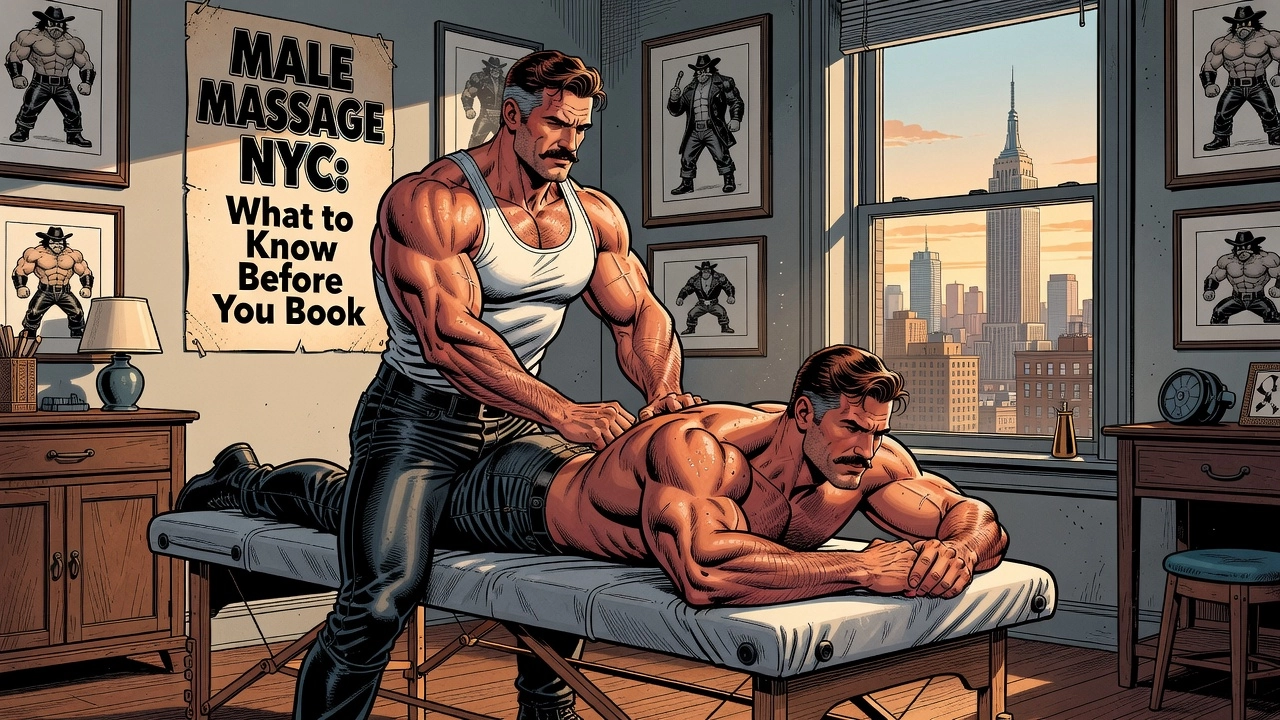
Booking your first massage can feel overwhelming, especially when you are not sure what to expect or where to start. If you have been searching for male massage NYC options, you are already on the right track toward better health, relaxation, and overall well-being. New York City offers an incredible range of massage services tailored specifically for men, but knowing how to navigate your choices makes all the difference between a mediocre experience and a truly transformative one.
Whether you are dealing with chronic muscle tension from long hours at a desk, recovering from an intense workout, or simply looking for a way to manage daily stress, the right massage therapist can deliver real, lasting results. However, walking into the booking process without any knowledge can lead to confusion, wasted money, or even disappointment.
This guide breaks down everything a first-timer needs to know. From understanding the most popular massage styles to knowing what questions to ask before you book, these key points will help you make a confident, informed decision from the very start.
What Does "Male Massage NYC" Actually Mean?
When you search "male massage NYC," you are not searching for one thing. You are searching for at least three distinct service categories that most directories and listing pages bundle together without explanation, leaving first-time searchers to figure out the difference on their own.
The first category is licensed therapeutic massage, delivered by a credentialed therapist who has completed a state-approved training program. In New York, that means 1,000-plus hours of accredited coursework, a passing score on a licensing examination, and ongoing compliance with NYS Office of the Professions standards. These sessions are health-focused, clinically informed, and legally regulated. The second category is M4M massage, meaning a male therapist working specifically with a male client. This format is legitimate and therapeutic, but it carries an additional layer of identity relevance for gay, bisexual, and curious men who want a bodywork environment that feels comfortable and judgment-free rather than clinical and indifferent. The third category covers sensual or intimacy-oriented sessions that operate in legally gray or unregulated areas, often surfacing alongside fully licensed providers in the same search results.
Sites like Mali Healing Spa's male-to-male massage page list M4M services alongside clinical modalities without explaining how these categories differ in scope, training, or regulation. That silence is not neutral. It puts the interpretive burden entirely on the person searching.
This ambiguity has real consequences. It affects who you book, what environment you walk into, whether your therapist has formal anatomical training, and whether you leave a session feeling genuinely restored or simply processed. For gay and bisexual men especially, the stakes are higher, because most mainstream spa environments were never designed with their comfort in mind.
Menquility exists precisely at this intersection: licensed therapeutic quality delivered inside an explicitly gay-affirming environment. That combination, a credentialed team, a full modality menu, private suites, and an unapologetically queer identity, is not currently offered by any directory listing or solo practitioner in NYC. It is a position the market has left open, and Menquility was built to fill it.
The Real Reason Gay Men Need Therapeutic Massage
Gay and bisexual men are not simply more stressed than average. They are carrying a clinically documented, physiologically measurable chronic load that accumulates across a lifetime. Research published in peer-reviewed literature confirms that gay and bisexual men disproportionately experience depression, anxiety, and related health risks as a direct consequence of minority stress exposure. This is not a personality trait or a temporary mood. It is a structural condition produced by years of hypervigilance, identity concealment, microaggressions, and the ongoing emotional labor of navigating spaces built for someone else. The physiological consequences are real: elevated cortisol, disrupted sleep, increased cardiovascular risk, and immune suppression are all documented outcomes.
Therapeutic massage intervenes at exactly this level. When the body receives skilled, intentional touch in a safe environment, the parasympathetic nervous system activates. Heart rate slows. Cortisol drops. Muscle tension accumulated through chronic sympathetic activation begins to release. These are not subjective feelings of relaxation; they are measurable physiological shifts. For gay and bi men whose nervous systems have been running in low-grade threat mode for years, regular therapeutic massage is not an indulgence. It is a targeted counterintervention.
Here is what compounds the clinical benefit: the environment itself matters. Healing from minority stress requires more than symptom management; it requires spaces where the underlying triggers are absent. When a client does not need to monitor his language, edit his disclosures, or brace for a heteronormative response, his nervous system is not in a state of low-grade threat. The parasympathetic benefit massage is designed to deliver can actually land. A gay-affirming environment removes that friction entirely, and the therapeutic outcome improves as a result.
Demand in the gay wellness space reflects this unmet need directly. Affirming M4M providers in major US cities report schedules that are consistently full or near-full, a pattern practitioners describe as a direct reflection of how little this community has historically been served by mainstream wellness. Gay and bi men have long deprioritized their own care, partly from cultural conditioning and partly because finding genuinely affirming providers requires effort most men eventually stop making. That calculation is beginning to shift. Framing therapeutic massage as a health intervention rather than a luxury is not marketing language. It is accurate, and for men who have spent years putting their own wellbeing last, it is worth saying plainly.
Solo Practitioner vs. Studio: Why the Difference Matters for Your First Booking
When most men search for male massage in NYC, they land on a directory page, not a studio. Platforms like MasseurFinder, ProMasseurs, and GayWellness aggregate dozens of individual practitioners under a single search result, with ProMasseurs alone listing more than 20 individual NYC-area providers. Each listing is its own small business: a personal phone number, a self-written bio, a handful of photos, and availability that changes week to week. For a first-time client, navigating this landscape is genuinely disorienting, and that disorientation is the first reason many men delay booking at all.
The Logistical Risks of Booking a Solo Practitioner
Solo practitioners carry structural limitations that become real problems when something goes wrong. Sessions are frequently held in private apartments or informal personal studios, with no institutional oversight and no vetting beyond the individual's own claims. If a practitioner is unavailable, ill, or simply stops responding, there is no fallback option and no one to call. Pricing across NYC solo listings ranges from $100 to $230 per session with no standardization, and the modality menu shifts entirely based on the individual's training and preferences. Some practitioners note availability only on specific days of the week; others advertise themselves as "visiting New York," meaning no fixed location exists at all. For a first booking, this level of variability introduces friction before the session even begins.
What a Studio Model Actually Provides
A studio eliminates most of these variables by design. A fixed commercial address, a team of licensed therapists, private dedicated suites, a published service menu with transparent pricing, a working phone number, and a confirmed email contact are not luxury features; they are the baseline of a professional experience. When one therapist is unavailable, another is not. The address does not change. The booking process is consistent.
For gay, bi, or curious men specifically, this structural clarity matters even more. The psychological barrier to a first M4M booking is rarely about desire; it is about confidence in the process. Knowing exactly where you are going, who you will speak with, and what the experience will look like removes the uncertainty that causes most men to close the browser tab and wait.
Menquility is currently the only queer-owned, appointment-only M4M therapeutic spa in NYC operating as a full studio with a licensed therapist team, private suites, and a brand identity built explicitly for gay, bi, and curious men. That specific combination, queer ownership plus professional infrastructure plus an unambiguous identity, exists nowhere else in the reviewed NYC market. You can reach the studio directly at +1 (646) 347-1740 or concierge@menquility.com, book a session at a known address, and walk in knowing the environment was built for you.
The Full Modality Menu: From Swedish to Nuru, Explained
Not every man searching for male massage in NYC knows which modality he actually needs. The menu can feel overwhelming when you are starting from zero. Here is a clear breakdown of every service type, what it does, and who it is best suited for.
Swedish Massage
Swedish massage is the logical starting point for first-timers. It uses long, gliding strokes, kneading, and rhythmic pressure applied across major muscle groups to reduce tension, improve circulation, and activate the parasympathetic nervous system, the branch of the nervous system responsible for rest and recovery. A published systematic review on PubMed confirms measurable physical and psychological benefits, making it the most evidence-backed introductory modality available. If you have never booked a massage before, Swedish is your zero-intimidation entry point.
Deep Tissue Massage
Deep tissue works further into the muscle layers and connective tissue than Swedish. It targets chronic tension, postural compensation patterns, and recovery from physical or sedentary stress. Men who accumulate tightness in the back, shoulders, and neck from desk work or physical labor consistently report deep tissue as their preferred modality. It requires slightly more communication with your therapist about pressure tolerance, but the results are more targeted and longer-lasting.
Hot Stone Massage
Heated basalt stones are placed on and moved across the body to deliver penetrating warmth that manual pressure alone cannot replicate. The heat allows muscle tissue to soften before deeper work begins, making it particularly effective for men who carry high physical tension but find direct pressure uncomfortable at first.
Thai and Aromatherapy Massage
Thai massage does not use oil-based strokes. Instead, the therapist guides the body through assisted stretches and applies pressure along specific energy pathways, making it ideal for men focused on mobility and range of motion rather than pure tension relief. Aromatherapy massage layers clinically selected essential oils into a standard session, adding olfactory and psychological relaxation on top of the physical bodywork. Both modalities serve clients who want a more holistic, full-sensory experience.
Gay Massage, Sensual Massage, and Nuru Massage
These are the M4M-specific modalities that most generic directories handle poorly, leaving men guessing about scope, boundaries, and professionalism. At Menquility, all three are clearly defined on the service menu and delivered by gay-affirming licensed therapists in a private suite. Nuru, a Japanese body-to-body technique using warm water-based gel derived from Nori seaweed, is described in detail at Menquility's dedicated Nuru Massage page. Per Wikipedia's entry on Nuru massage), the word translates directly to "slippery" in Japanese. Every therapist at Menquility holds a New York State License in Massage Therapy, and all services are performed within licensed therapeutic scope. The clarity of the menu removes the guesswork that makes booking solo practitioners stressful.
Session Lengths
Sessions across all modalities run 60, 90, or 120 minutes. You choose the duration that fits your schedule and therapeutic goals, with no upsell pressure once you arrive.
What Makes a Massage Truly Gay-Affirming (And Why It Is Not Just Marketing)
The wellness industry loves the phrase "LGBT-friendly." You will find it on spa websites, in booking platform filters, and in social media bios across New York City. But there is a meaningful and measurable difference between a business that tolerates queer clients and one that was built specifically for them. That distinction is not marketing language. It shows up in every detail of the actual experience.
Tolerance vs. Design
An LGBT-friendly spa adapts an existing straight-default environment to accommodate queer guests. A queer-owned spa starts from a different foundation entirely. The physical aesthetic, the intake language, the pronouns therapists use naturally, the imagery on the walls, the absence of heteronormative small talk; all of it either signals belonging or signals that you are a guest being hosted on someone else's terms. According to research on gay men's wellness and minority stress, finding a provider who is "truly gay-affirming, who understands the specific wellness needs of gay men, who creates an environment where a gay client can fully relax without monitoring their behavior or managing a therapist's discomfort, remains surprisingly difficult" even in major cities.
The Hidden Tax of Identity Management
For gay and bi men, the cost of entering a mainstream wellness space is not just financial. It is cognitive. You read the room before you speak. You soften how you describe your life. You gauge the therapist's body language before you mention a partner. This constant self-monitoring is a documented feature of minority stress, and it directly undermines the parasympathetic response that makes massage therapeutically effective. You cannot fully surrender to a session when part of your brain is still running a social calculation.
What Structural Affirmation Actually Looks Like
At Menquility, gay-affirming is a design principle, not a disclaimer. Licensed therapists are selected specifically for their comfort and competence with gay, bi, and curious male clients. The environment is built as a masculine sanctuary where no assumptions are made about who you are or why you are there. This matters most for men exploring M4M bodywork for the first time. Regardless of how you identify, you will encounter no interrogation, no raised eyebrows, and no pressure to explain yourself. Discretion at a queer-owned studio is structural; it is not a policy someone can forget to enforce.
Finding Male Massage Near You in NYC: Midtown and Beyond
Menquility — Kips Bay, Manhattan NYC. By appointment only. Contact the concierge for arrival details.
From Chelsea and the West 20s: Chelsea carries significant weight in New York's gay history, and men based there will find Menquility approximately 10 minutes away by subway or a 20-minute walk north via 7th Avenue. The commute is short enough to fit comfortably around a lunch break or an early evening slot after work.
From Hell's Kitchen and the Theater District: These neighborhoods sit immediately adjacent to the 34th Street corridor. For the large gay population concentrated in Hell's Kitchen, Menquility is either walkable or a single subway stop, making it a realistic option before work, between appointments, or after an evening in the neighborhood.
From Greenwich Village and the West Village: Two of New York's most densely queer zip codes connect to Menquility in under 15 minutes via the A/C/E or 1/2/3 trains. Men searching for gay massage options in Manhattan from the Village will find the ride barely registers.
From the Upper East Side, Upper West Side, and Financial District: The 34th Street hub receives the 4/5/6, 1/2/3, and A/C/E lines, covering the full north-south spine of the borough without requiring transfers. A client traveling from the Upper West Side or the Financial District arrives at the same central point with equal ease.
For any man running a "male massage near me" search from a Manhattan address, Menquility's Midtown location is not a geographic compromise. It is a 10-to-20-minute commute from virtually every significant residential and commercial pocket in the borough.
What Male Massage in NYC Actually Costs
Price transparency is not a strength of this market. Understanding what you will actually pay for male massage in NYC requires knowing which tier of provider you are dealing with before you ever make contact.
Solo practitioners listed on directory platforms charge anywhere from $100 to $230 or more per session in 2026, with rates shifting based on modality, session length, and whether the session takes place in a residential setting or a dedicated studio space. Pricing is frequently absent from public listings entirely, meaning you often cannot get a number without sending a direct message first. That opacity is itself a signal worth paying attention to.
Studio-format providers operate on a different pricing logic. According to current NYC massage market data, licensed therapeutic studios in Manhattan typically charge between $120 and $216 per session, with facility type listed as a primary cost driver. Professional infrastructure, private suites, licensed staff, and consistent availability all factor into that number legitimately.
The critical distinction first-time clients miss is this: a $100 session and a $150 session are not the same product at different price points. One may involve an unlicensed solo practitioner working out of a residential apartment with no formal modality training. The other involves a licensed therapist, a properly equipped private suite, and a consistent professional environment. The dollar gap reflects a real gap in quality, safety, and experience.
When evaluating any male massage provider in NYC, weigh these five factors before cost becomes the deciding variable:
- Therapist licensing status (licensed massage therapist vs. unlicensed independent)
- Physical environment (private suite vs. residential apartment)
- Modality transparency (clearly listed services vs. vague or contact-only menus)
- Availability consistency (appointment-based studio vs. solo practitioner with variable scheduling)
- Affirming identity (explicitly gay and bi-affirming vs. passively "LGBT-friendly")
Menquility's pricing reflects the studio standard, not the directory floor. Sessions run 60 to 120 minutes across a full modality menu, delivered by gay-affirming licensed therapists in private suites. That positions Menquility within the credible professional range for licensed Manhattan bodywork, and against the right comparison set.
What to Expect at Your First M4M Massage Appointment
Booking your first appointment does not need to feel complicated. Menquility operates by appointment only, with no walk-ins accepted. This is an intentional structural choice, not a logistical quirk. Every client who books arrives to a confirmed private suite, a therapist who has been briefed and prepared, and a session that starts on time without the friction of shared waiting rooms or overlapping schedules bleeding into your experience.
Scheduling is straightforward. Call or text +1 (646) 347-1740, or email concierge@menquility.com to book your session. Appointments are available daily from 10am to 10pm, which means there is real flexibility for before-work mornings, after-work evenings, and full weekend bookings. Once your appointment is confirmed, the logistical part is done.
Menquility — Kips Bay, Manhattan NYC. By appointment only. Contact the concierge for arrival details.
Before the session begins, you will have a brief consultation with your therapist. First-timers are not expected to arrive with a firm opinion on modality or pressure depth. If you are unsure whether Swedish, Deep Tissue, or another option on the menu is right for you, that conversation is exactly what the intake process is designed to resolve. According to guidance for first-time M4M clients, letting your therapist know it is your first session allows them to pace the experience thoughtfully and address your specific areas of tension without pressure to perform familiarity.
Discretion at Menquility is not a policy statement; it is built into how the studio operates. Appointment-only intake, sole-occupancy private suites, and a gay-affirming team combine to eliminate the moments that make other environments feel risky for men who are still navigating their identity in some areas of their lives. There is no public waiting area, no small talk requiring you to manage how you present yourself, and no point during the visit where the space stops working for you. Gay, bi, and curious men are equally welcome, with no explanation required.
Ready to Book? Here Is Where to Start
The NYC M4M massage market is fragmented, ambiguous, and difficult to navigate without a clear framework. Directory listings aggregate dozens of unvetted individual providers, and most first-time searches return aggregator pages rather than a single trusted studio. The decision that protects you is straightforward: choose a licensed, queer-owned studio with a transparent modality menu, private suites, and explicitly gay-affirming therapists. That is not a preference; it is the structural difference between a therapeutic experience and an uncertain one.
For gay and bi men managing minority stress, this is a health decision with documented physiological consequences, not a discretionary luxury. Elevated cortisol, disrupted sleep, heightened cardiovascular risk, and chronic anxiety are measurable outcomes of minority stress. Therapeutic massage in a genuinely affirming environment directly addresses those outcomes in ways a generic spa cannot replicate.
If you have never booked M4M massage before, Menquility's appointment-only private suite model is specifically built to make that first session feel private, safe, and worth returning to. No walk-ins, no waiting rooms, no ambiguity.
Menquility — Kips Bay, Manhattan NYC. By appointment only. Contact the concierge for arrival details.
Conclusion
Finding the right male massage in NYC does not have to feel overwhelming. By understanding your goals, researching qualified therapists, asking the right questions before booking, and knowing what to expect during your session, you set yourself up for a genuinely rewarding experience. The right massage goes beyond simple relaxation; it supports muscle recovery, reduces stress, and improves your overall quality of life in ways you will feel for days afterward.
New York City offers world-class options for men seeking professional massage therapy. You simply need the knowledge to choose wisely.
Now is the time to take action. Use what you have learned here, browse your options with confidence, and book the session your body has been asking for. Your best self is one appointment away.